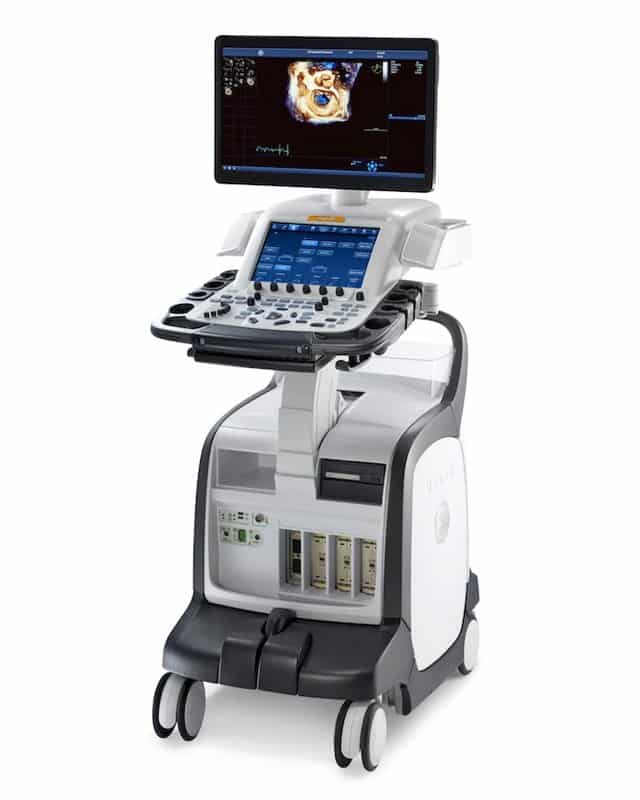
Finding the Best Cardiac Ultrasound Machine in 2026
Cardiology demands speed, accuracy, and diagnostic confidence—so it’s no surprise that cardiac ultrasound is one of the most competitive and fast-evolving segments in medical imaging. Manufacturers continue to innovate with advanced quantification tools, automated measurements, and workflow-driven analysis designed specifically for echocardiography. As a result, new cardiac ultrasound systems offer more capability and reliability than ever for providers across all care settings.
In recent years, 4D cardiac ultrasound has moved from premium platforms into high-end and even select midrange systems, making advanced echo imaging more accessible. Probe technology has expanded as well. Today’s best cardiac ultrasound machines support a wide range of sector transducers for adult, pediatric, and neonatal cardiology. Single-crystal and matrix probes—once limited to flagship systems—now appear in more cost-effective categories, allowing clinicians to achieve higher sensitivity and improved penetration without premium pricing.
Because cardiac imaging requires exceptional frame rates, rapid screen refresh, and robust post-processing, cardiology groups are upgrading more frequently than specialties with less demanding imaging needs. Modern machines deliver faster processing, clearer cardiac imaging, and efficiency-boosting tools that support higher patient volumes and more accurate assessments.
Cardiac ultrasound also carries the broadest probe requirements in the ultrasound market. Adult sector, pediatric sector, neonatal sector, 4D sector, adult TEE, pediatric TEE, 4D TEE, and multiple Pedoff (non-imaging) probes are commonly used across routine and advanced echocardiography. This extensive probe lineup—combined with the performance demands of cardiac imaging—makes cardiac ultrasound systems inherently more expensive than similarly tiered OB/GYN, vascular, MSK, or general imaging platforms.
As the largest distributor of cardiac ultrasound machines in the U.S., Probo Medical brings unmatched technical expertise and hands-on experience to every system recommendation. Our engineering and clinical applications teams rigorously test, compare, and review the industry’s leading echocardiography machines to understand how each system performs in real-world cardiac settings. Our guidance is rooted in what customers need most: image quality, reliability, workflow efficiency, and true price-to-performance value.
The 2026 Cardiac Ultrasound Buyer’s Guide is built to help clinicians and cardiology professionals quickly identify the best cardiac ultrasound systems for their practice. Your ideal system depends on your clinical requirements, workflow, and budget. To simplify your search, Probo Medical has organized today’s top cardiac ultrasound machines into five clear price categories, giving you a direct path to the right system at the right investment.
Cardiac Ultrasound Machine Categories
The most advanced, top of the line systems, but also the most expensive.
Mid and High-EndMost, but not all of the features of the premium segment at a lower cost.
BasicThe most commonly purchased systems with some premium features.
PortableTop-of-the-line portable systems, but less expensive than consoles.
The Best Premium Cardiac Ultrasound Systems
Recommended systems: GE HealthCare Vivid E90, GE HealthCare Vivid E95, Philips Epiq CVx
In this segment, the GE HealthCare Vivid E90, GE HealthCare Vivid E95, and Philips EPIQ CVx stand out as the strongest contenders for clinicians who want advanced cardiac imaging without the full premium cost. The Vivid E90 serves as a powerful 2D-focused platform built on GE’s cSound architecture, offering excellent penetration, robust quantification tools, and strong overall value. The Vivid E95 builds on the E90 with enhanced 4D capabilities, faster rendering, and additional probe compatibility, making it the preferred choice for practices that rely heavily on 4D cardiac imaging. Philips’ EPIQ CVx, engineered specifically for cardiology, brings nSIGHT beamforming, superb ergonomics, and a refined workflow that improves consistency across echo studies. While the Vivid E95 steps closer to GE’s premium-tier performance with its expanded 4D toolset, the Vivid E90 remains an exceptional value for providers who prioritize high-frame-rate 2D echo and detailed quantification. The Philips EPIQ CVx rounds out the category with excellent image quality, intuitive controls, and the option for advanced cardiac transducers, making it a versatile choice for cardiology departments of all sizes. Together, these three systems offer a compelling combination of performance, reliability, and price, giving clinicians access to high-end cardiac ultrasound imaging without investing in the full premium segment.
What to expect in the premium cardiac ultrasound category
- The best image quality
- The most advanced technology providing superfast processing speeds
- Technologies like 4D strain, 4D TEE for advanced interventional procedures
- A 2D Matrix transducer providing sectional view and 4D echo
- All cardiac disciplines supported: LVO, 2D & 4D strain, and pediatric
- Repeatable, automatic LV function data with efficient 4D workflow
- Powerful automatic image optimization and auto measurement
- Semi or Automatic Quantification tools
- Full cardiac measurement package and flexible reporting format
The Best Mid and High-End Cardiac Ultrasound Systems
Recommended systems: GE HealthCare Vivid T9, Philips Epiq 7, Philips Affiniti 70
The mid–high-end cardiac ultrasound category offers performance that approaches the premium tier but at a more attainable price point by scaling back only a few of the top-tier features. In this segment, the GE HealthCare Vivid T9, Philips EPIQ 7, and Philips Affiniti 70 stand out as the most competitive options for clinicians seeking strong cardiac imaging capabilities without committing to full premium pricing. The Vivid T9 delivers impressive value with its cSound architecture, advanced cardiac quantification tools, and reliable 2D and Doppler performance in a more budget-friendly chassis. The Affiniti 70, designed as a lighter and more ergonomic alternative to Philips’ flagship platforms, offers broad probe compatibility, fast processing, and dependable day-to-day echo imaging. The Philips EPIQ 7, positioned above the Affiniti line, brings premium-level nSIGHT beamforming, superior ergonomics, and support for xMATRIX probes—making it the most advanced system in this mid–high-end category. While the EPIQ 7 delivers more sophisticated imaging tools and 4D TEE options, the Affiniti 70 remains a strong value for cardiology practices that need excellent image quality, a larger probe portfolio, and fast workflow at a lower price point. The GE Vivid T9, meanwhile, continues to offer exceptional reliability and cardiac-focused performance, providing many of the benefits of GE’s higher-end platforms in a cost-effective system. Together, these three systems give providers a versatile blend of image quality, workflow efficiency, and price-to-performance value within the mid–high-end cardiac ultrasound range.
What to expect in the mid to high-end cardiac ultrasound category:
- Better 2D and Doppler image quality
- Prioritized for workflow efficiency over research focused features
- Fusion of ultrasound with CT, MRI, or PET/CT to find regions of interest
- All cardiac disciplines supported: LVO, 2D & 4D strain, and pediatric
- Automation for LV function such as 2D speckle tracking strain
- Automatic image optimization and auto measurement
- Semi or Automatic Quantification tools for cardiac motion
The Best Basic Cardiac Ultrasound Systems
Recommended systems: GE HealthCare Vivid T8, Philips Affiniti 50, Mindray MX7
The best basic cardiac ultrasound machines are designed to strike the ideal balance between affordability and reliable day-to-day performance for clinicians who primarily perform standard cardiac exams with occasional advanced needs. In this category, the GE HealthCare Vivid T8, Philips Affiniti 50, and Mindray MX7 stand out as the strongest options for practices seeking dependable cardiac imaging without the cost or complexity of higher-tier systems. The Affiniti 50 leads the group with its proven Philips architecture, broad probe selection, and consistently strong 2D cardiac imaging, making it a natural evolution from the long-trusted Philips HD11xe. GE’s Vivid T8 provides a durable, cardiac-focused platform built for high-volume environments, blending the reliability of GE’s Vivid technology with a streamlined, cost-effective design. It offers essential cardiac measurements, solid image quality, and the stability users expect from the Vivid line. The Mindray MX7 rounds out the group with an exceptionally portable design, strong imaging presets, and a modern user interface, giving clinicians a lightweight yet capable option for routine cardiac studies. Together, these three systems deliver the core functionality, reliability, and value that define the best basic cardiac ultrasound machines.
What to expect in the basic cardiac ultrasound category:
- Good 2D and Doppler image quality
- Provides most scans needed in an echo lab or hospital practice
- Prioritizes image quality over fast or advanced hardware to save costs
- All cardiac disciplines supported: LVO, Stress echo, TDI, pediatric
- Some automation, but more time required to complete exams
- Automatic image optimization for Auto color & auto Doppler
- Full cardiac measurement package
The Best Portable Cardiac Ultrasound Systems
Recommended systems: GE HealthCare Vivid iq, Philips CX50, Mindray MX8 CV
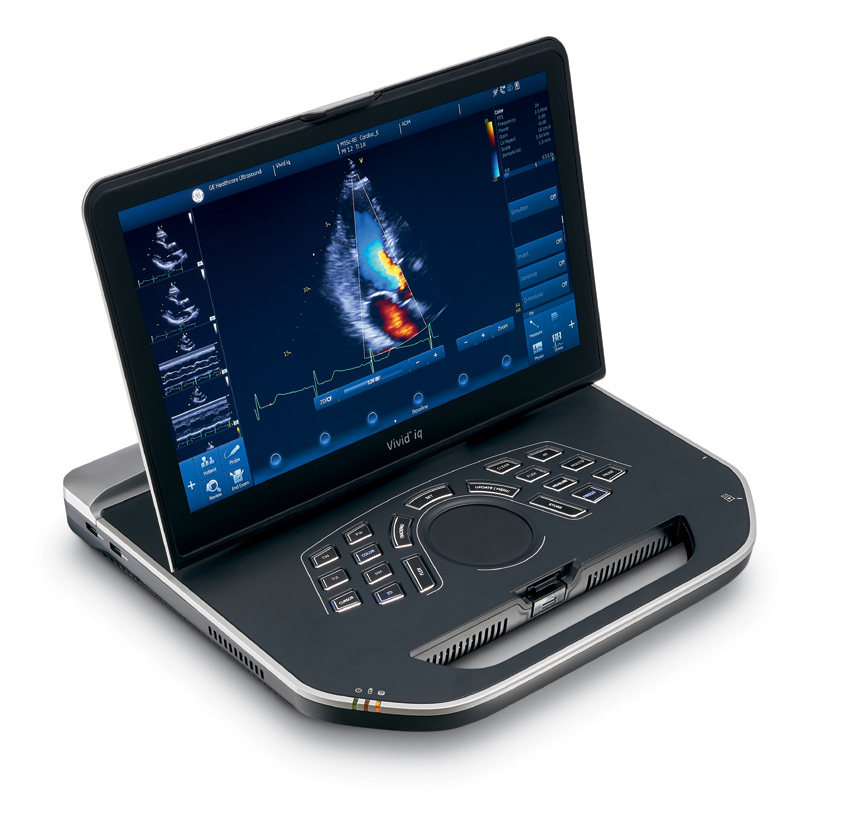
Portable cardiac ultrasound machines span a wide range of prices and capabilities, supporting emergency medicine, surgery, point-of-care imaging, and clinicians who need mobility across multiple locations. As portable platforms have grown nearly as powerful as console systems in the same class, many providers now prefer them for their flexibility, ease of transport, and simplified service logistics. In the cardiac-focused portable segment, the GE HealthCare Vivid iq, Philips CX50, and Mindray MX8 CV stand out as the most capable options for clinicians who need strong performance in a compact form. The Philips CX50 remains one of the most advanced portable cardiac ultrasound machines available, offering superb image quality, deep quantification tools, and support for single-crystal probes as well as 4D TEE—making it a true shared-service solution across specialties. GE’s Vivid iq delivers a modernized evolution of the Vivid portable lineup, combining lightweight mobility with powerful cardiac imaging, advanced quantification packages, and excellent probe compatibility. The Mindray MX8 CV brings strong value to the category with premium-level imaging in an ultra-portable footprint, offering a bright touchscreen interface, efficient workflow tools, and cardiac-specific transducer options. Together, these systems provide high-performance portable cardiac imaging for clinicians who need mobility without sacrificing capability.
What to expect in the portable cardiac ultrasound category:
- Better to acceptable 2D & Doppler image quality
- New but miniaturized hardware
- Interventional features: 4D TEE & ICE functions
- LVO, Stress Echo, TDI, and pediatric cardiac
- Simple workflow & plunkable image quality
- Auto image optimization for auto color and Doppler
- Full cardiac measurement package
Why Choose Probo Cardiology?
At Probo, our mission is simple — to provide you with the best ultrasound solution that perfectly meets your needs. We know that when you choose us, we’re not just selling a product; we’re building a relationship that will last for years to come. From our experienced sales team to our dedicated applications, service, and support specialists, we’re here to ensure you receive not only a high-performing ultrasound system but also a seamless experience and lasting partnership.
We take pride in recommending systems that are reliable, easy to maintain, and supported with readily available parts for years to come. Every system mentioned in this guide has been carefully selected to ensure you won’t face unnecessary hurdles in the future. With any of these systems, we offer live virtual demonstrations as well as comprehensive training both virtually and in person. And when questions arise, our team of sonographers is just a call away, offering free technical support to help your staff make the most of your investment. This level of service is unmatched by any other company outside of the original manufacturers.
This guide is just the beginning. Your next best step is to speak with one of our expert sales representatives who will listen to your specific needs, offer you competitive pricing, and deliver a high-quality system right to your practice. Give us a call today at 866-513-8322 or contact us here to explore more information and reviews. Start your journey with Probo, and discover a better way to deliver exceptional care.